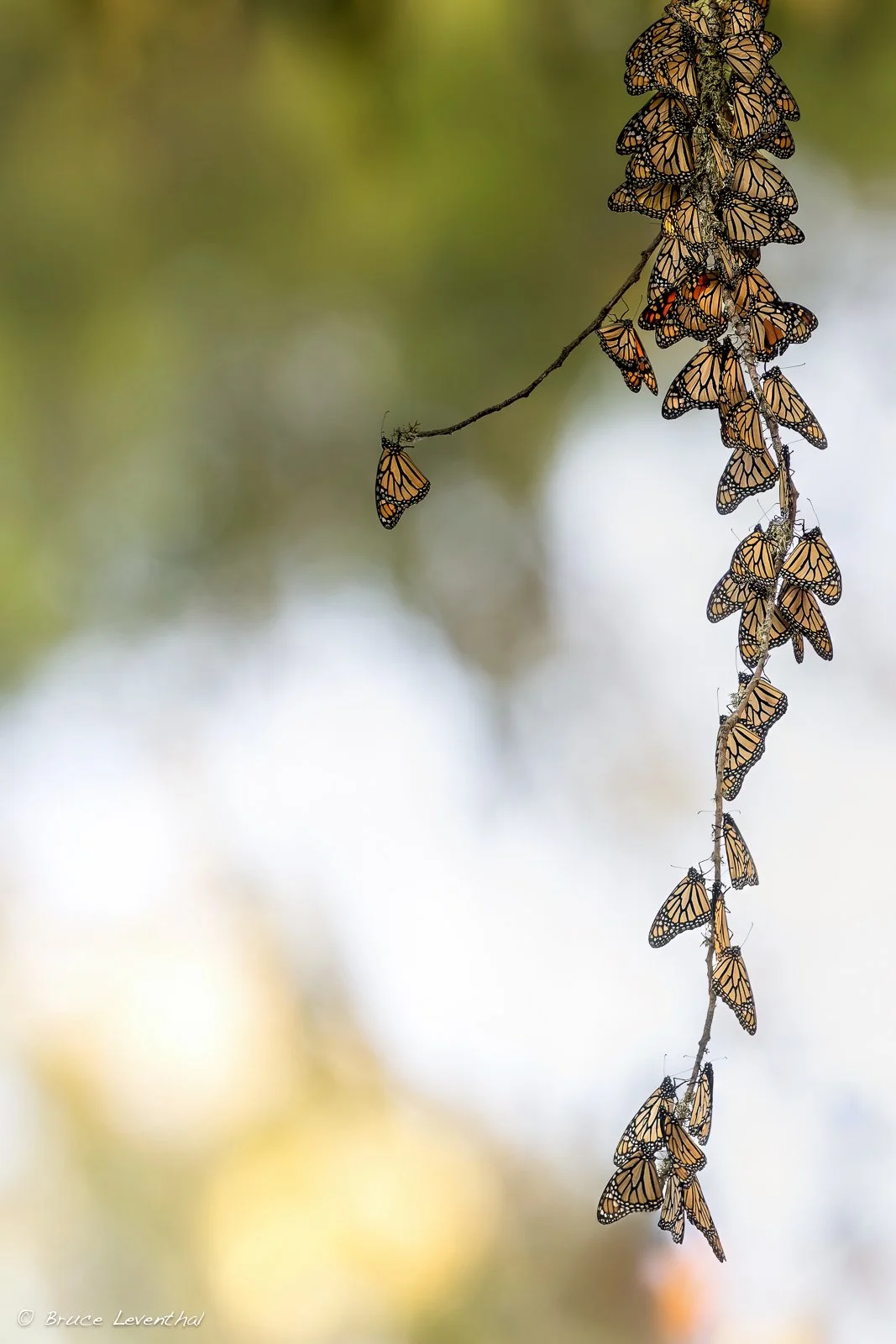
Like the timber wolf, polar bear, bald eagle, and California condor, the monarch butterfly is an iconic species that evokes an intrinsic biophilic1 impulse that inspires conservation. In contrast to other “glamor fauna,” monarchs are insects. In fact, the monarch butterfly is an ambassador for promoting insects, ethical gardening, land conservation, and biodiversity. No other insect is as familiar to and loved by the North American public as much as the monarch butterfly.
Sadly, this once abundant species now exists at the whim of humanity as it faces the same crisis that most other plants and animals now endure. Unless you are a species that thrives in and among humans, are a generalist that can tolerate drastic climatic conditions, and can reproduce in spite of urbanization, you are a species on the brink… you are hanging on by a thread.
Today, monarch butterflies can be found in Australia, New Zealand, Hawaii, North America, Central America, and South America. Often claimed as “their” iconic insect by the local human population, this butterfly exhibits uniquely different behaviors throughout its various range. The monarchs’ in the South Pacific, Central America, South America, and Florida are generally considered to be non-migratory. In contrast, the populations that thrive east of the Rockies, and along the Pacific coast are known for their migratory behavior.
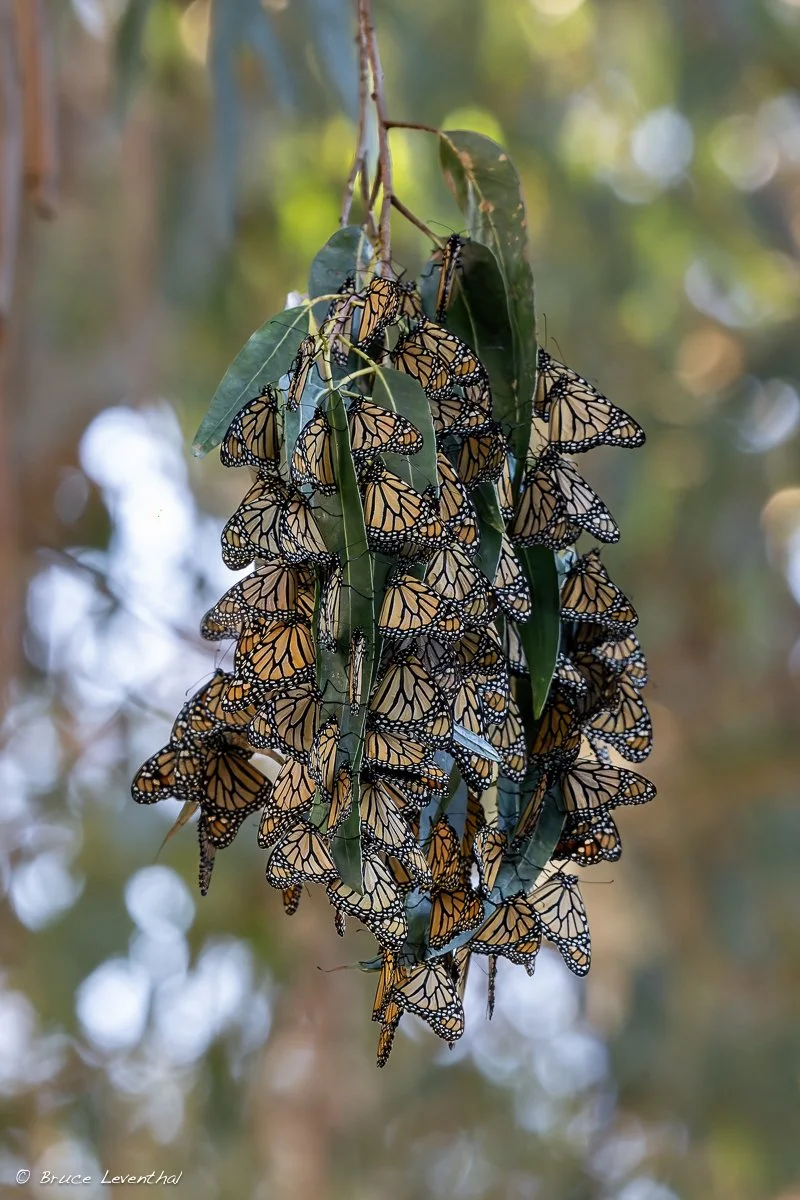
Natural Bridges State Beach : October 2024
Interestingly, the butterflies that inhabit the central US are the true long distance migrants. Beginning with their spring departure from Mexico, the emigrants undergo three to five reproductive generations as they head north to Ontario. The final group that emerges in September form a so-called “super generation” that flies south to overwinter in the Mexican oyamel fir forests. The northern-most individuals travel up to 3000 miles to roost in trees that their great, great, great grandparents departed earlier that year. This migration is one of those amazing ecological stories that captivates the public, and explains why monarchs have achieved their iconic status.
While many Californians believe that their winter monarchs are part of the Mexican migratory population, this is not the case. The western migrants move from west to east where they go through as many as four reproductive generations. Arriving in Idaho, Colorado, Utah, and Arizona during the spring months, these butterflies lay their eggs on milkweed and their babies undergo multiple reproductive events before heading west to California. As with the oyamel forests in Mexico, the coastal forests of California form a stable micro-climate that allows the butterflies to slow their metabolism, conserve energy, and survive during the cooler winter months. While the California population does not approach the size of the mid-continental monarchs, much like their cousins to the east, they form tree-top clusters during cool evenings as a way of maintaining thermal stability.
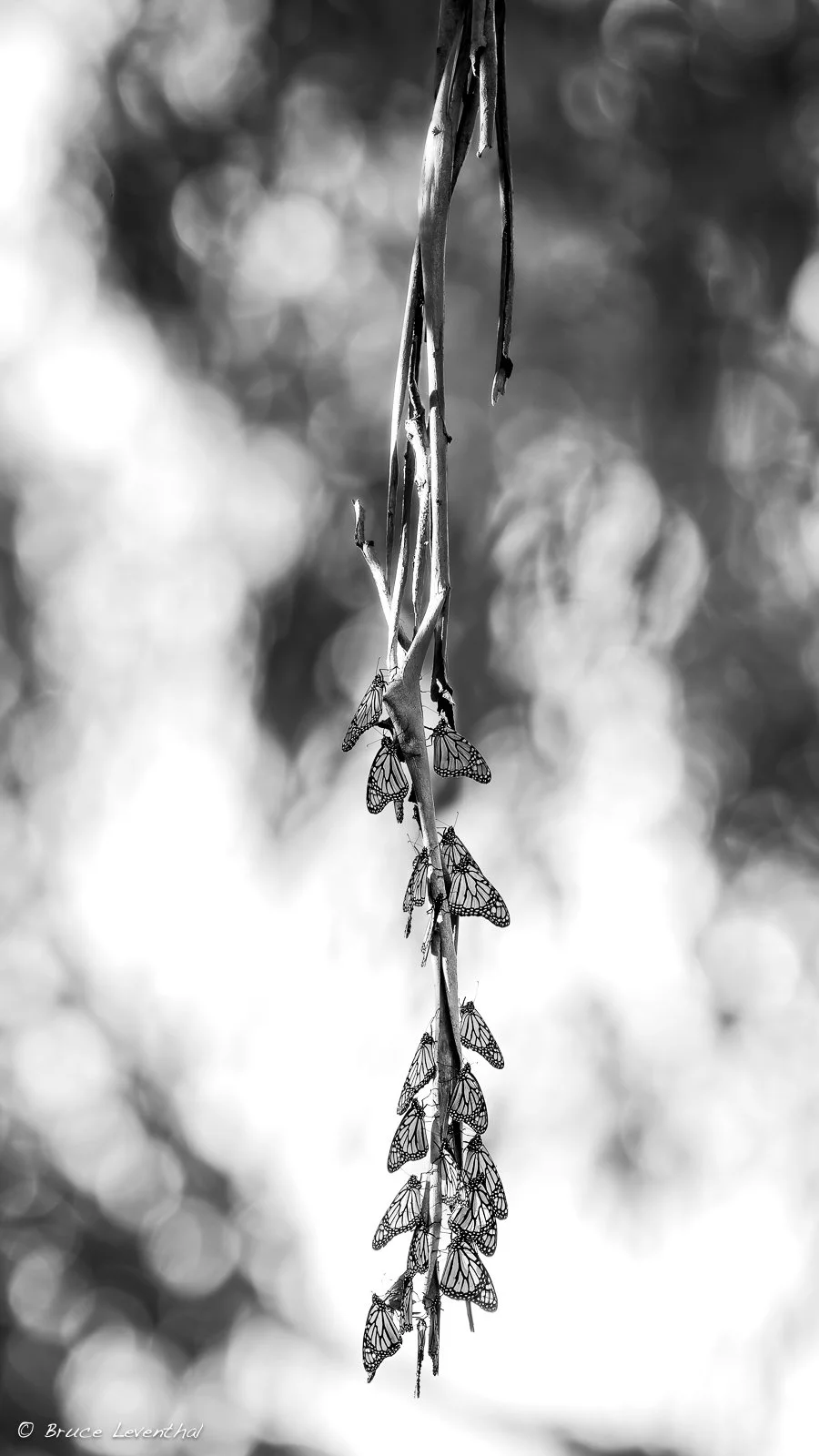
Natural Bridges State Beach : 10-28-25
Regardless of the migratory path, the monarch population is experiencing a monumental decline. At the present, the western population is 1% of its mid 1980’s peak, and while the eastern population had a strong 2024, its total biomass is about 20% of what it once was2. The mix of urbanization, mono-culture farming, use of pesticides, logging, and climate instability has impacted the survival of migratory monarch butterflies. Literally hanging on by a thread, the long term survival of migratory monarch population is far from guaranteed, and unless we find a way to reverse the momentum of habitat loss and instability, it is possible that future generations will not experience the wonders of this unique phenomenon of the insect world.
1Biophilia : The innate human tendency to connect with nature and other forms of life.
©2000-2025 BTLeventhal.com / BruceLeventhal.com All rights reserved. No image on this site may be used without permission.