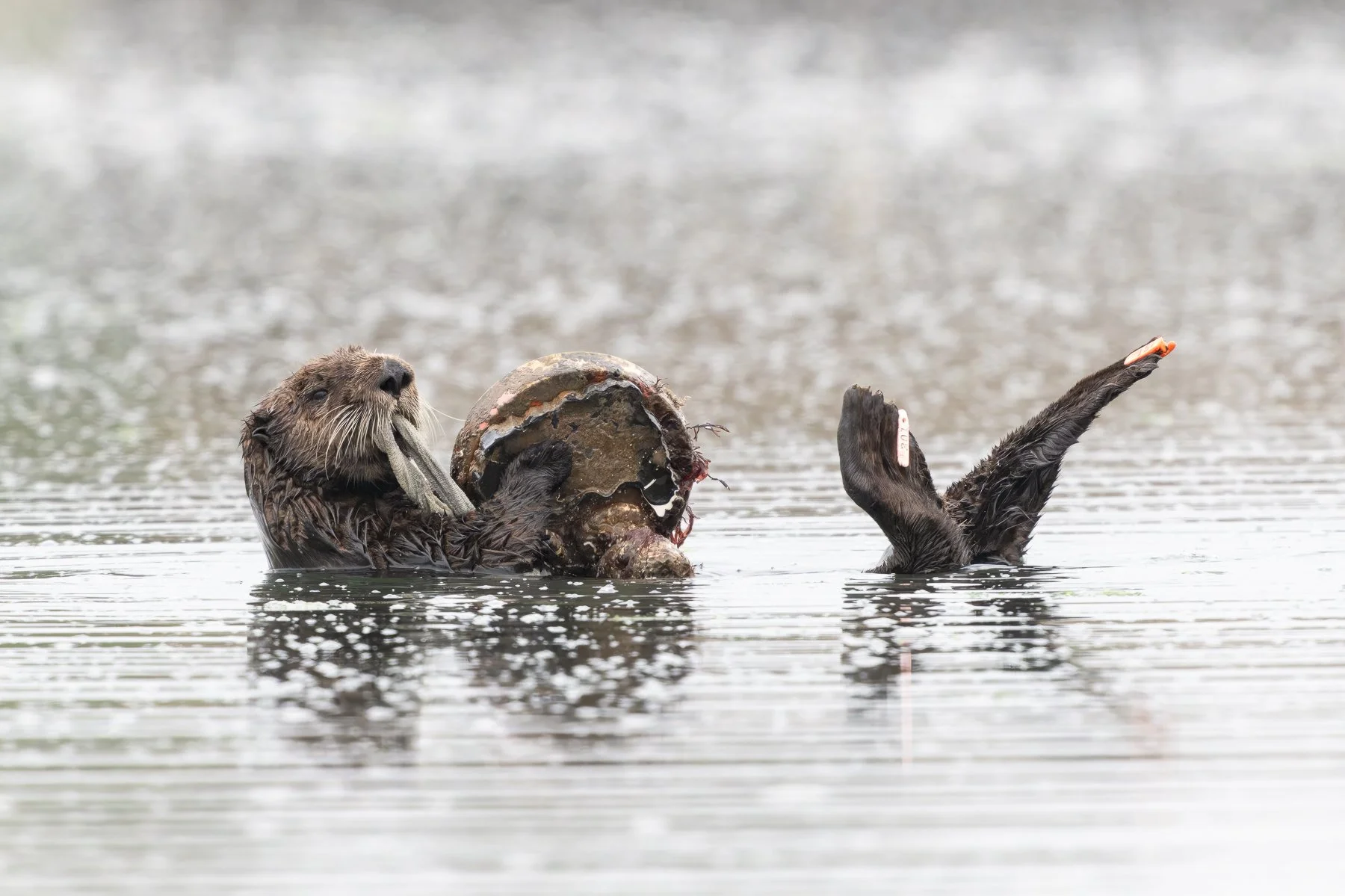
I am the Voice of the Kelp and the Sea, I speak for the otters, for they can't speak to thee! Plastic and trash tangle deep where they play, so please clean the waters and carry it away!
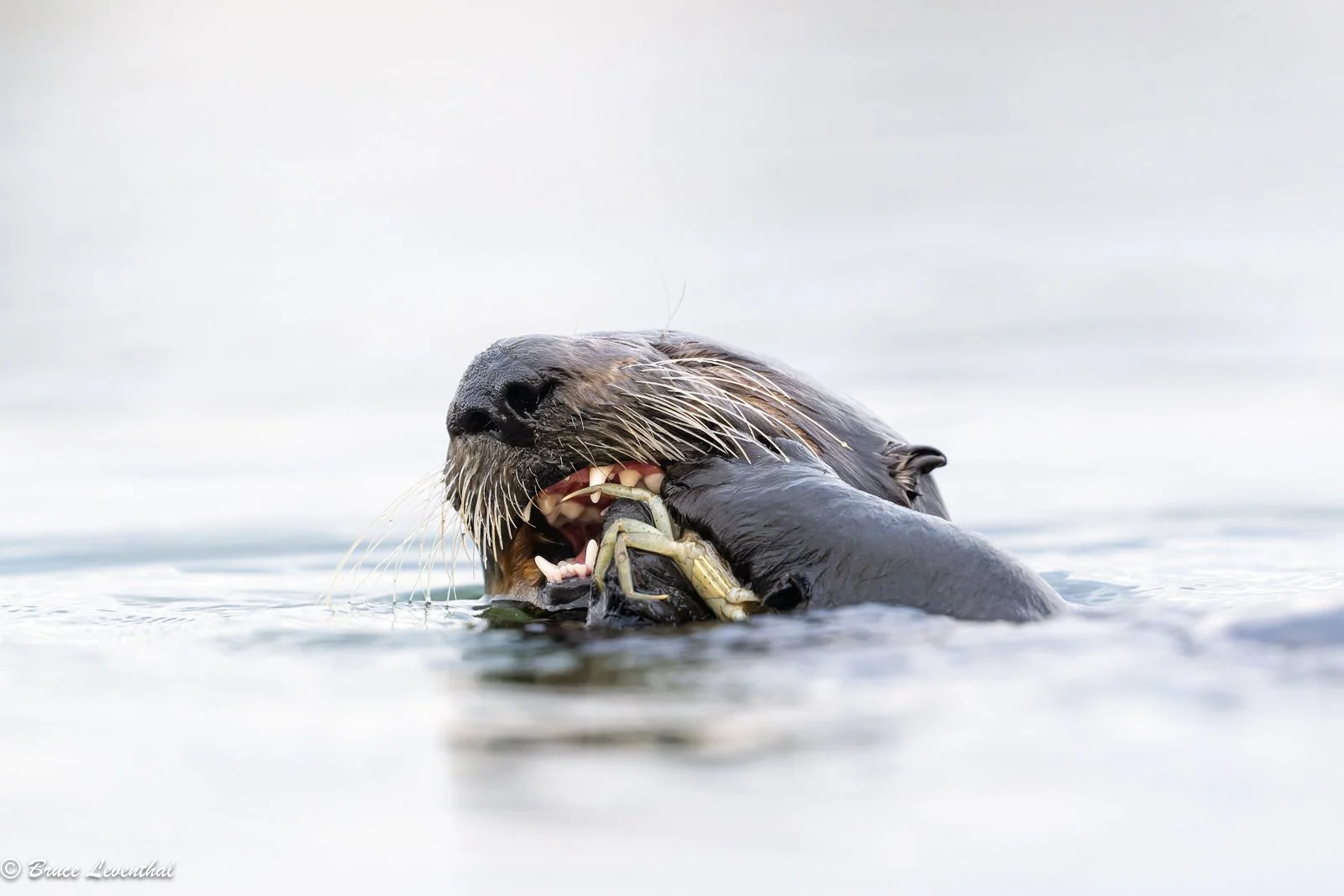
Southern Sea Otter eating and invasive European green crab
Otters first appeared around 30 million years ago during the Oligocene epoch. Otters belong to the family Mustelidae which includes other small carnivores like weasels, badgers, wolverines, and minks. Over time, various otter lineages diverged and adapted to a semi-aquatic and aquatic lifestyles. Otters can be found on nearly every continent except Australia and Antarctica. The sea otter (Enhydra lutris) is a specialized group within the family that has evolved to live almost entirely in the ocean rather than on land or in rivers like their biological cousins. Found along the coastal waters of the North Pacific, from Russia and Alaska down to central California, sea otters rely on an exceptionally dense fur coat (rather than blubber) for insulation, use tools like rocks to crack open shellfish, and play a keystone role in kelp forest ecosystems by controlling sea urchin populations.
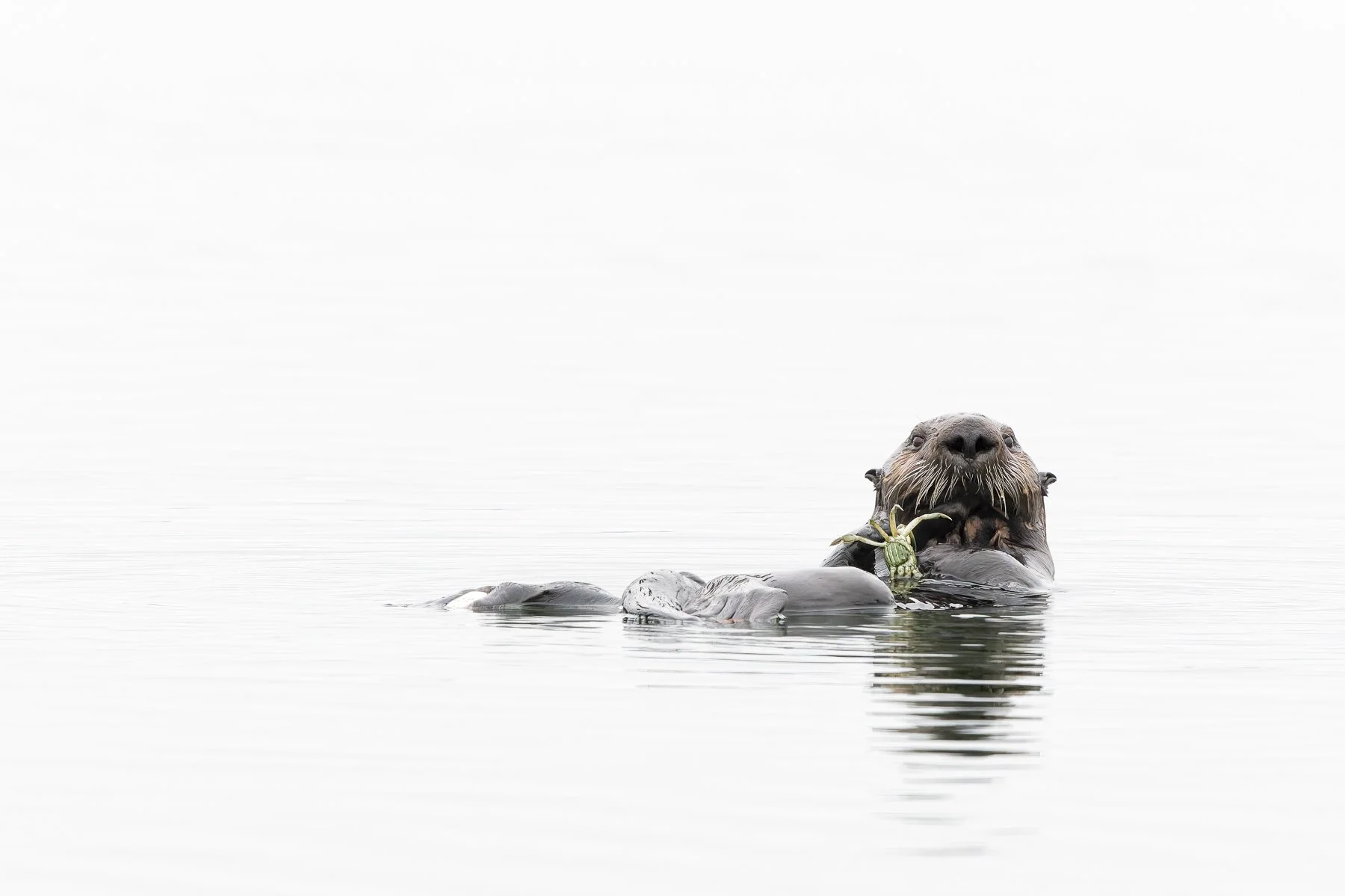
With crab clutched between paws, this sea otter is clearing out the exotics one crab at a time.
California is home to the southern sea otter, Enhydra lutris nereis, and is found only along the central California coast. The California sea otter is generally smaller and lighter in build than its northern counterpart. In contrast, the northern sea otter, Enhydra lutris kenyoni, ranges from Alaska down through British Columbia and Washington, and it tends to be larger with a proportionally bigger skull.
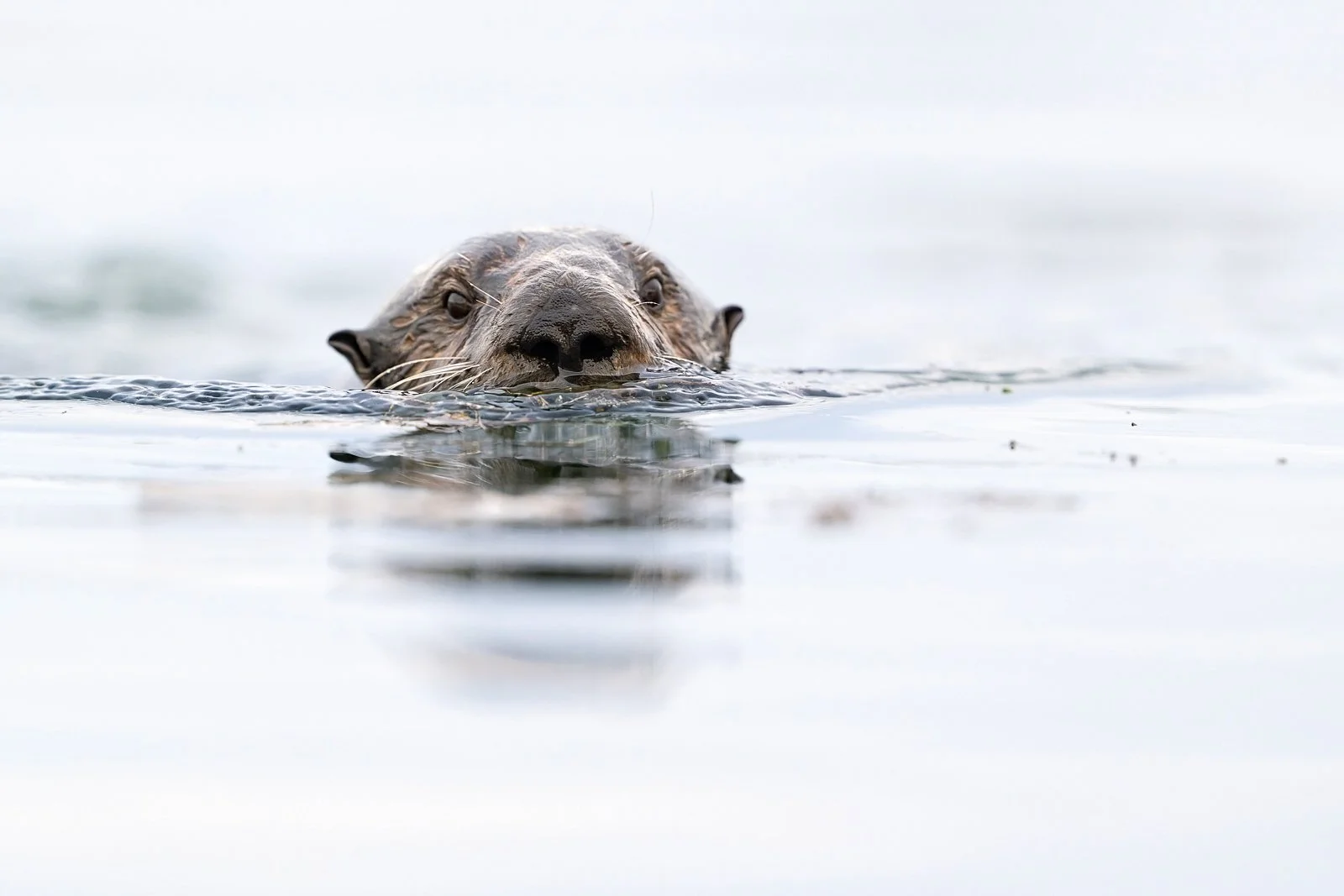
Southern sea otter surfacing to check me out
Throughout the Monterey Bay, the southern sea otters feed on a range of bottom-dwelling invertebrates, including clams, mussels, sea urchins, and crabs, which they locate using their sensitive whiskers and paws. In the estuaries on the California coast, otters have taken to preying heavily on the invasive European green crab, where the population is estimated to consume between 50,000 and 120,000 of the crabs annually. This intensive predation has helped bring the invasive species under control, and by removing a crab that burrows into and destabilizes marsh sediment, otters have indirectly supported the recovery of eelgrass beds and thus stabilize the collapsing salt marshes throughout the Monterey Bay.
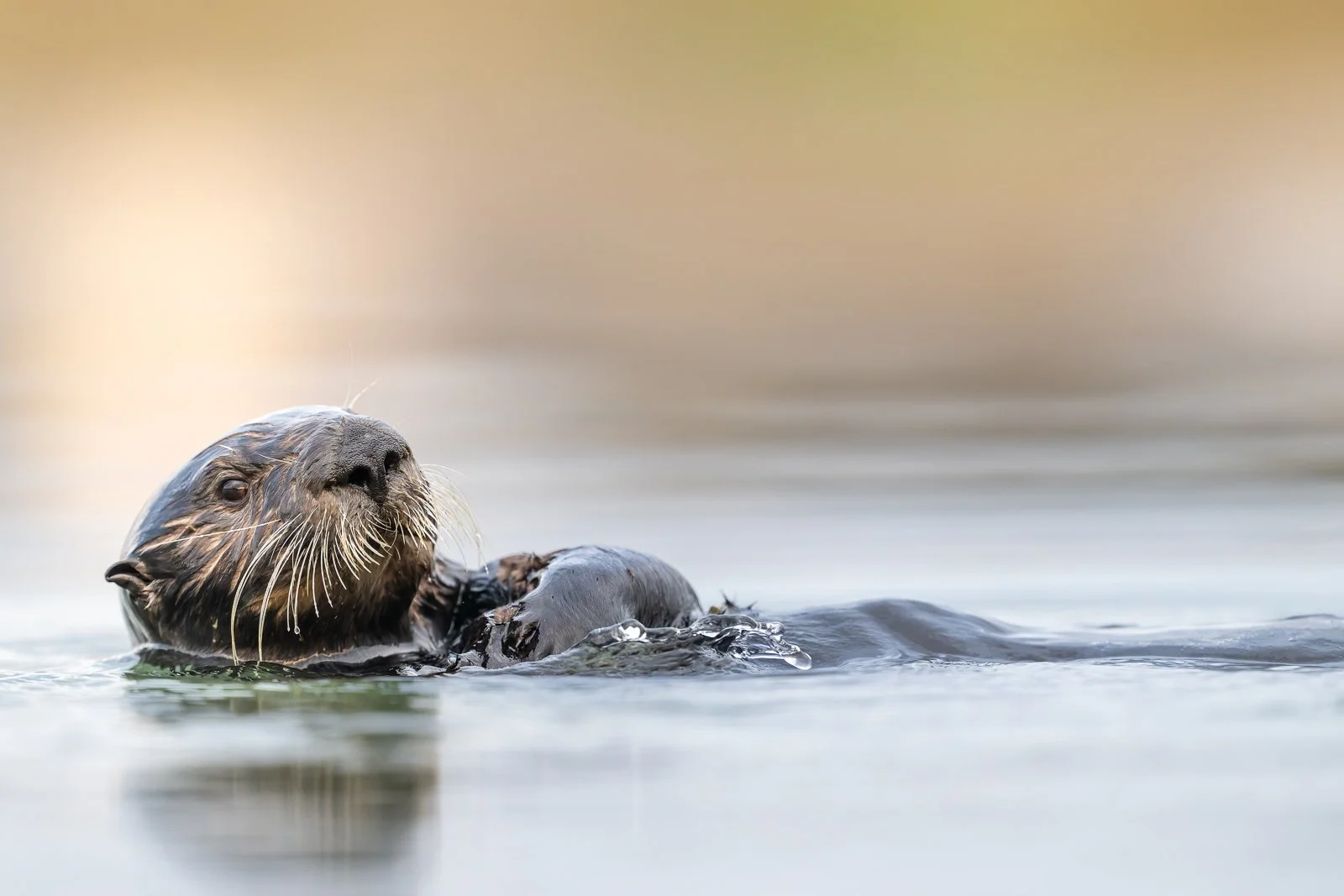
A bit of grooming during sunset
Sea otters are known for their playfulness, and much of this play doubles as practical skill-building — juggling shells, wrestling with kelp, or manipulating found objects hones the dexterity they rely on for tool use and foraging. This same curiosity can just as easily draw them toward human debris; unable to distinguish a plastic container or discarded rag from a rock or shell, an otter will often investigate it the same way. This instinct for play carries real risk. Marine debris and lost fishing gear are documented causes of entanglement in sea otters, capable of causing injury and interfering with the grooming essential to keeping their fur insulated.
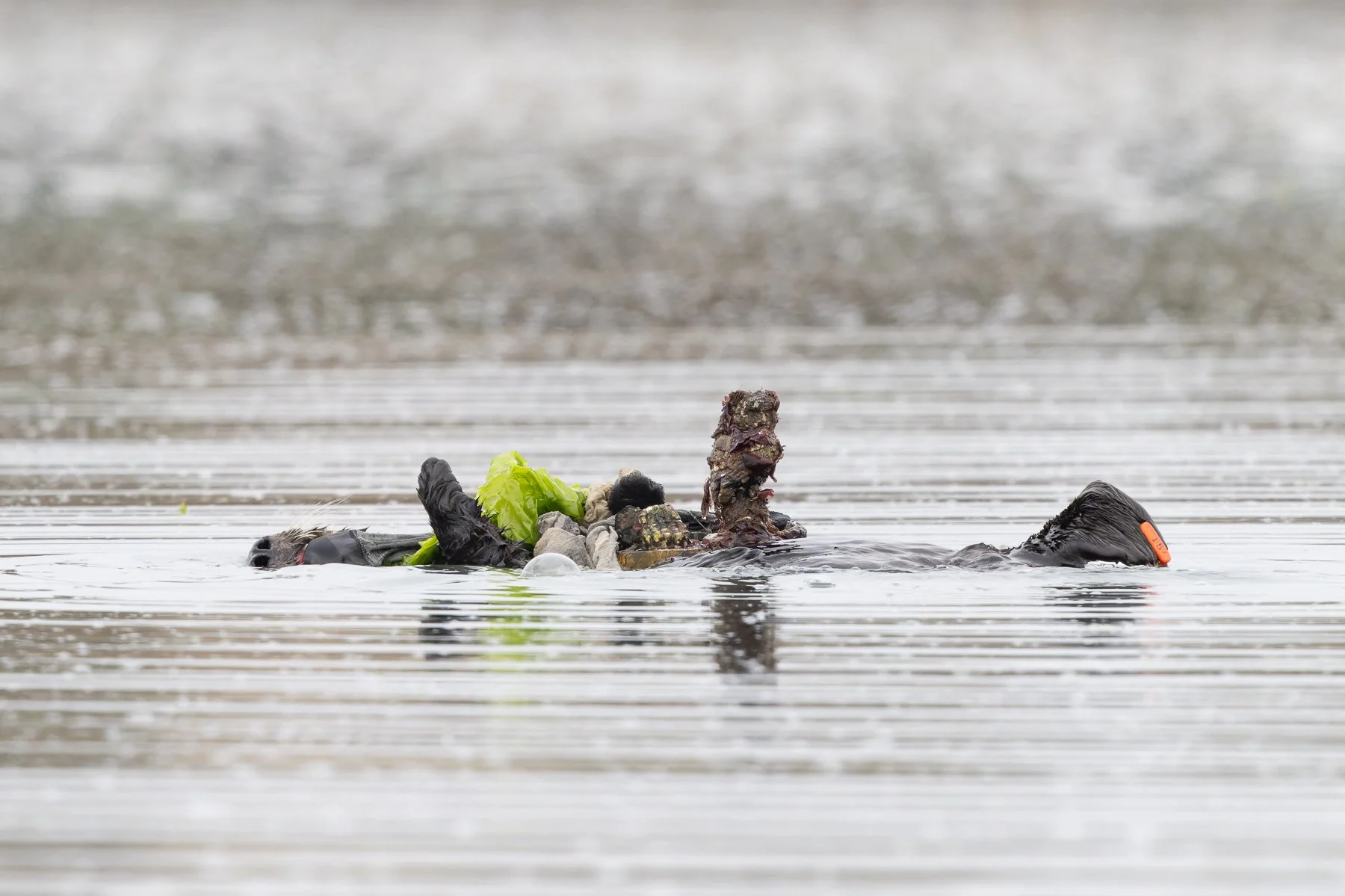
Sea otters play and sometimes this play can lead to their death
The old adage, "a picture is worth a thousand words," resonated with me as I watched one of my favorite otters discover piles of human debris during a dive for food. After spending thirty minutes actively eating crabs and clams, he surfaced with a large plastic container and a discarded towel. Obsessed with his find, the little guy spent an hour playing with these "toys," and I feared he would become tangled in the debris or swallow pieces of the towel. What we choose to do with our waste, our plastics, and our presence in these habitats really matters. We share this planet with millions of other species, and our consciousness needs to expand beyond the self if we hope to thrive alongside the biodiversity we depend on.
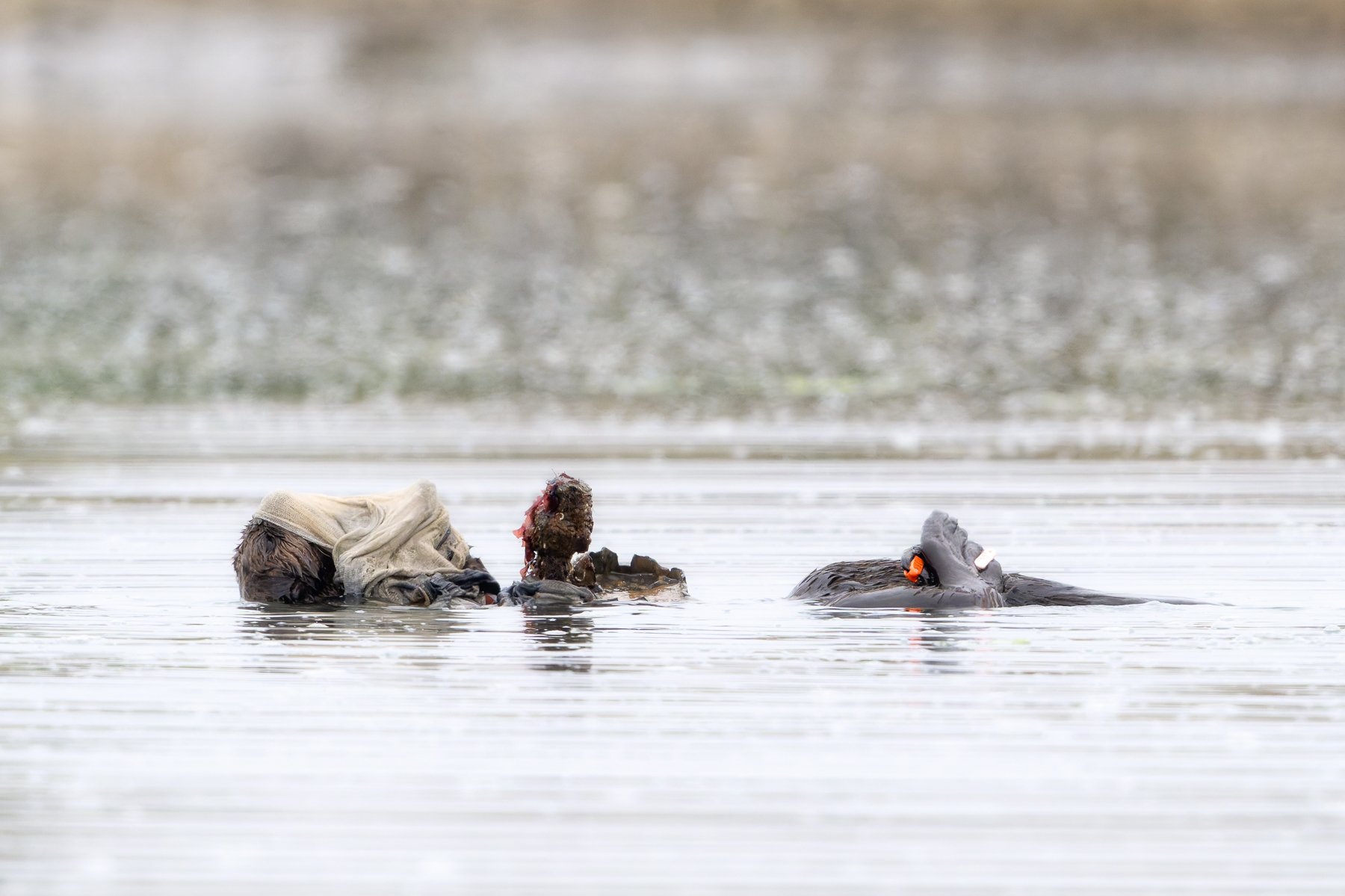
Playing with a towel on its head, I was concerned about the otters obsession with our debris
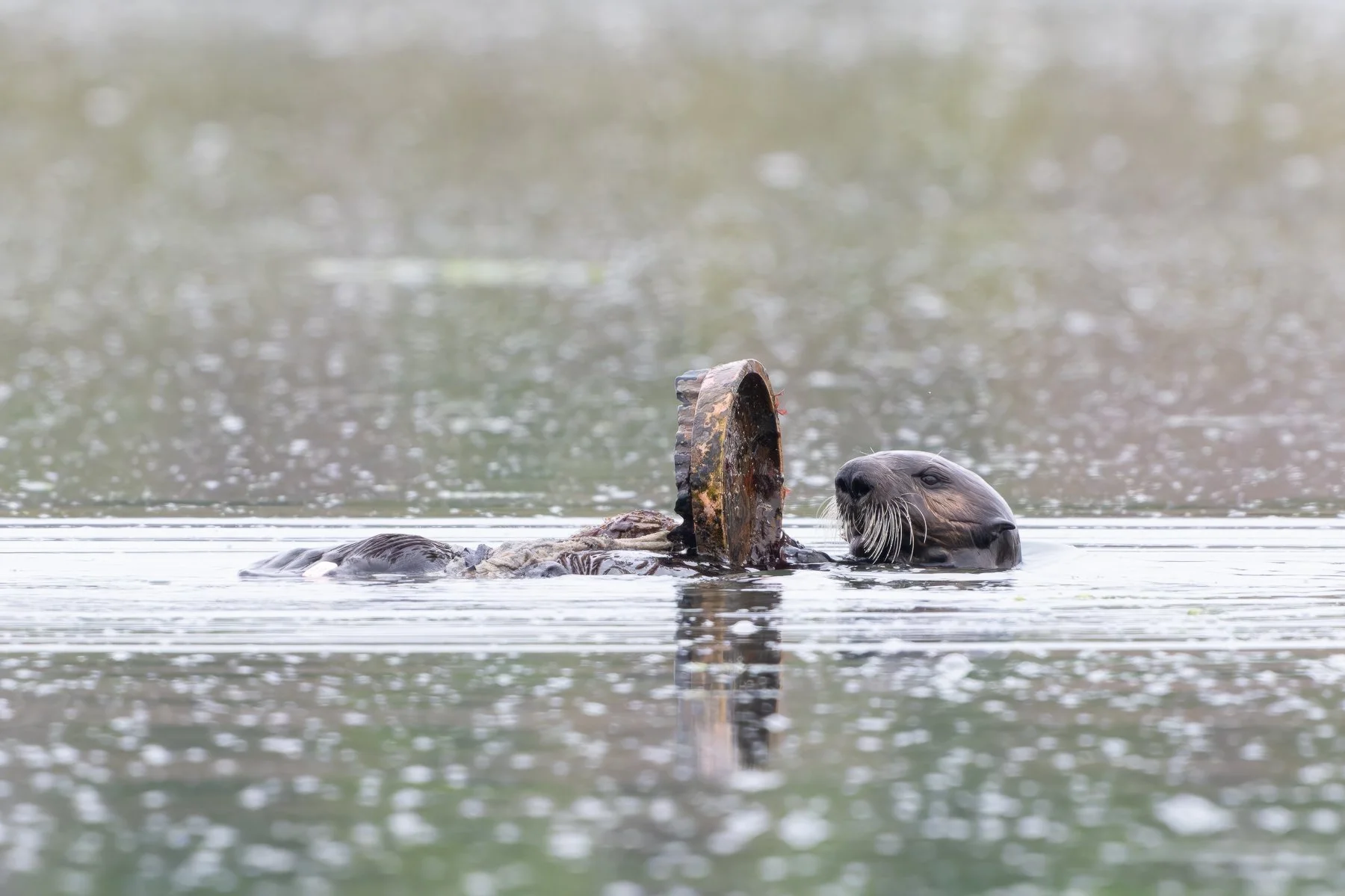
Plastics are everywhere… What we choose to do really matters.
©2000-2026 BruceLeventhal.com All rights reserved. No image on this site may be used without permission.